Cycle tourism is attracting more and more followers. Traveling by bike combines freedom, slow travels and adventure, while respecting the environment. Whether you are planning a weekend cycling along forest paths or several weeks on the road, it’s important to prepare well for your departure. Here are 12 practical tips to start your cycling adventures with confidence.
What is cycle tourism?
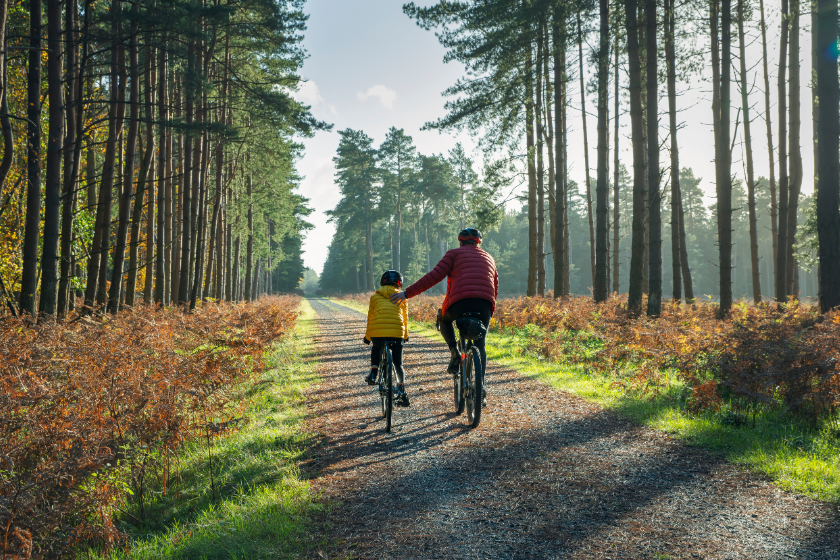
Cycle tourism is the art of traveling by bike, taking time to discover landscapes and villages to the rhythmic whir of your pedals. Unlike sports cycling, where performance and speed come first, cycle tourism favors a slower pace of life. Enthusiasts take advantage of the road, while admiring the landscapes and making regular stops to enjoy whatever they encounter.
Cycle tourism can be done over a day, a weekend, several weeks or even several months (for the most adventurous)! This type of vacation is becoming increasingly appealing: it’s accessible to all depending on the itinerary, it offers a feeling of true freedom, and it encourages a return to the basics by reducing a trip’s ecological impact... So the question is whether you are ready to get started?
💡
Did you know? Cycling is popular worldwide! In 2021, France had more than 18,800 km of bike trails. In the US, there were 37,542 km of established routes across 35 states and the District of Columbia by 2025. While in the UK, there were 20,501 km of signed routes in 2020. And those numbers are increasing all the time! (1)
1. Plan your route intelligently
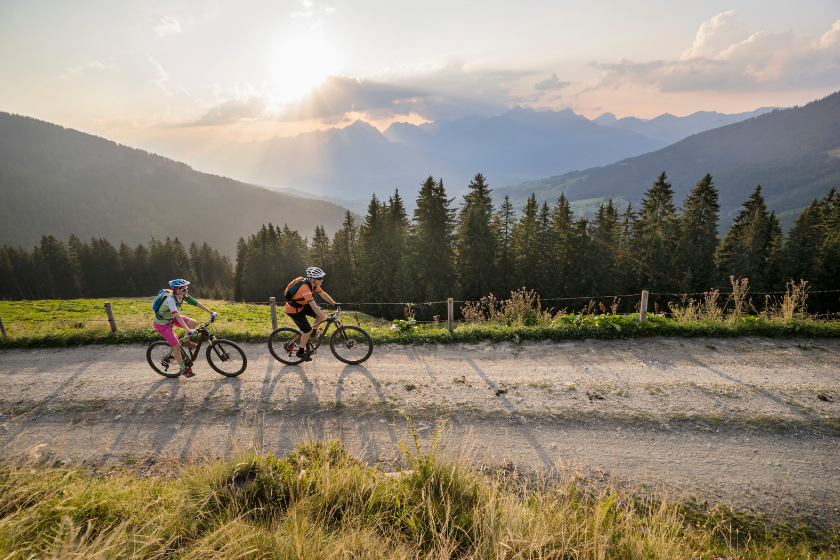
Across most countries, you’ll find a large number of cycle paths, greenways, and other developed routes. Whether you’re considering a gentle ride in the countryside, mountain biking in the mountains or exploring the coastline, a bike trip requires a little preparation. Before you set off, carefully study the bike paths and points of interest.
Several sites and applications are very useful for planning a cycling route, such as Cycle Travel, Komoot, Strava, Geovelo, etc. You can create your own route or consult those proposed by other members of these cycling communities.
If you’re lucky enough to be planning a cycle trip, start your research by looking at any associations that support cycle tourism in that specific country.
You will often find several tools to refine your itinerary, such as a list of ready-made cycling routes.
You may also find cycle planners that are useful if you know your start and end point. These will suggest either touristy routes (secure cycle paths that are clearly marked and of tourist interest) and/or the fastest route (mainly secondary roads with low traffic, but not specifically designated for cycling).
🚵♂️
Here are some tips to get started with a suitable route:
> Don’t skip the various stages: if it’s your first trip, don’t aim too high in terms of distance and difficulty (think about checking the elevation of each stage, for example), and choose a route that suits your physical abilities. Riding 50km with a loaded bike will be more challenging than the same distance on an unloaded bike.
> Start with a short trip: a 3 or 4-day itinerary, up to no more than 30-40 km per day, is a good start.
> Create your itinerary taking your physical fitness into account. Look at the distances, altitude differences, difficulty etc. before looking at the other criteria (such as the type of road you’ll be cycling on, tourist places, landscapes and so on).
> Think about accommodation, water points and refueling possibilities.
> Don’t skip the various stages: if it’s your first trip, don’t aim too high in terms of distance and difficulty (think about checking the elevation of each stage, for example), and choose a route that suits your physical abilities. Riding 50km with a loaded bike will be more challenging than the same distance on an unloaded bike.
> Start with a short trip: a 3 or 4-day itinerary, up to no more than 30-40 km per day, is a good start.
> Create your itinerary taking your physical fitness into account. Look at the distances, altitude differences, difficulty etc. before looking at the other criteria (such as the type of road you’ll be cycling on, tourist places, landscapes and so on).
> Think about accommodation, water points and refueling possibilities.
2. Think about how you’ll reach the starting point of your journey
There are several ways you can join the starting point of your journey. These may be more or less convenient depending on whether you are traveling with your own bikes or renting them on site.
In any case, don’t forget to take this into account when planning your route.
- By train: on some trains it is possible to travel with your bicycle fully-assembled (though you may be asked to pay an additional fee for this privilege). On all other trains, you will have to fold or disassemble your bike and stow it in a bicycle bag. Booking in advance is often necessary.
- By bus: most regional bus lines will allow you to put your bike in the hold, but conditions vary depending on the company and the season. Remember to make enquiries beforehand.
- By car: if the train or bus are not possible, you can also join your route by car, with the bikes in the trunk or attached to a bike rack. You will then need to find suitable parking at the starting point of the course.
🚲
Bike rental may be the best solution for some stays if it is too complex or expensive to take your bike with you, or if you don’t wish to invest in new equipment.
There’s also an increasing number of bike rental companies who will offer to provide you with a bike in city A and you can then drop it off in city B at the end of your trip.
There’s also an increasing number of bike rental companies who will offer to provide you with a bike in city A and you can then drop it off in city B at the end of your trip.
3. Think about accommodation on the road
Hotel, campsite, cottage or something entirely different... the options are numerous. In the context of cycle tourism, another solution has become increasingly popular: home exchanging, which is particularly convenient for this type of trip. Indeed, you can enjoy a real home to rest in, wash your belongings and prepare your equipment, ready for the next day of adventuring.
Home exchanging is also a social option, because your hosts can give you valuable advice on the most beautiful routes in the region, local restaurants or hidden corners to explore. Moreover, it is often possible to stay in a private room in a host’s home while they’re also staying there. This can be more convenient for just one night, and might even provide the opportunity to share a drink or a meal together!
Home swapping with HomeExchange therefore offers the chance to combine comfort with a cost-effective way to travel, and the chance to immerse yourself in local life.
💡
Advice:
To facilitate your search for an exchange, you can:
- Join the "Cyclists" group on HomeExchange.
- Target private rooms when you are only staying one night.
To facilitate your search for an exchange, you can:
- Join the "Cyclists" group on HomeExchange.
- Target private rooms when you are only staying one night.
4. Choose a suitable bike
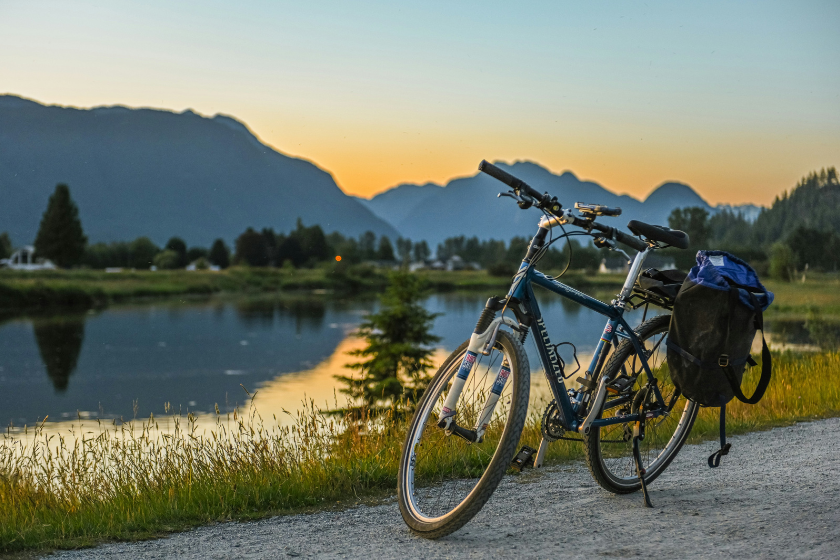
Your choice of bike is essential. Choose a bike that is the right size and adapted to your route: hiking bike, hybrid, gravel, e-bike etc. You don’t need to spend a fortune. The most important thing is that the bike supports the weight of your saddlebags, and that the bike is comfortable for you.
There are three main families of handlebars: flat bar (classic), butterfly bar (also known as trekking or touring bars - there are several possible options), or the racing bar (sporty). Don’t hesitate to test them all before you decide which is best for you.
5. Take care of your comfort in the saddle
The saddle of your bike is often the little detail that can spoil a trip if it is poorly adapted. Make sure you have a comfortable saddle that has been adjusted to suit your physique. Before you set off for a long ride, make sure you test it out on several shorter up-hill journeys.
An ergonomic saddle, combined with good cycling shorts, will minimise pain and improve your overall endurance. Remember: comfort is the key to a successful cycling trip.
6. Invest in good saddlebags
Forget your backpack: to preserve your back and support your balance on the bike, opt for bicycle bags (also known as saddlebags) instead. Installed properly, they’re both waterproof and solid and will allow for a more serene bike trip.
Several types of saddlebags exist: front and rear saddlebags, handlebar bags, saddlebags without a luggage rack... Your choice should be based on the duration of your journey and the quantity of belongings and equipment you will need to carry.
For trips lasting several days, we’d advise you to opt for resistant, comfortable and waterproof panniers (so you can handle the rain without stress).
7. Plan to pack essential equipment
On the equipment side, take:
- powerful lighting for safety.
- a sturdy padlock to protect your bike.
- practical accessories like an isothermal bottle.
- a small stove if you are planning on camping.
- a first aid kit.
A minimum of repair tools (multitool, pump, spare inner tubes, patches) should always accompany your outings, even for short distances.
🚲
Tip: learn the basics of bicycle mechanics before you start. Knowing how to fix a flat tire, adjust a derailleur or replace a chain can save a trip.
8. Equip yourself properly and be ready to face the weather
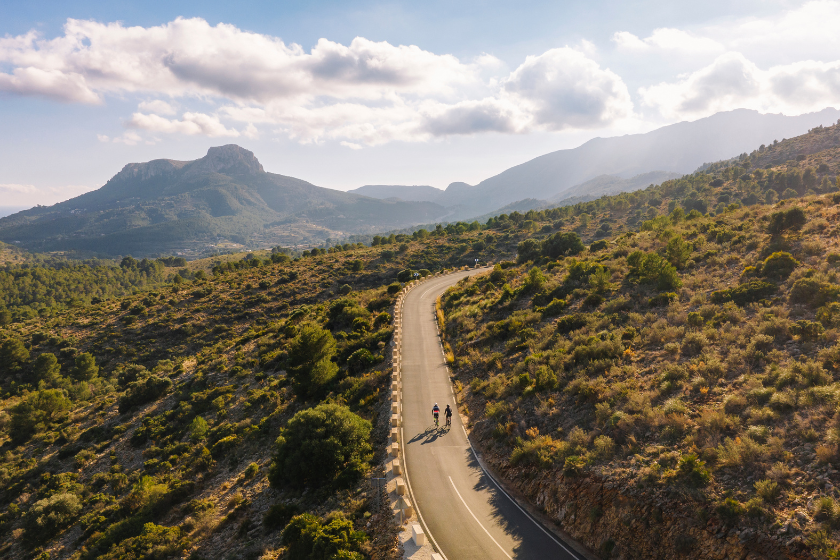
Good equipment makes all the difference when traveling by bike. Bring specialist clothing adapted to the weather: a windbreaker or a rain jacket, breathable layers to manage perspiration, and warm clothes if you ride at altitude or in the evening.
Don’t forget your sun protection (glasses, sunscreen). Finally, gloves and a well-fitted helmet are highly recommended for your safety.
🚴♀️
Tip: travel light! You can quickly regret every unnecessary extra kilo (especially on hills)! Focus on essentials: breathable clothing, a repair kit, a first aid kit, and some essentials if you are planning on camping (sleeping bag, tent, something to cook with...).
9. Prepare your body gradually
If you are not used to cycling, train up-hill with short outings, then gradually increase the distance. Also practice riding a loaded bike to evaluate the daily distances you can comfortably cover.
Even if it is not necessary to do intensive training, your body still needs to get used to the effort and prolonged position on the bike. Training before the big departure can also help you find your pedaling rhythm, which is the key to a smooth journey.
🚵♀️
Advice:
> Listen to your body: small aches and pains are inevitable at the beginning of this adventure, but they will fade little-by-little if you find the right cruising pace and you have the right equipment.
> Warm up: think about stretching and preparing your body for the effort at the beginning of each new day.
> Listen to your body: small aches and pains are inevitable at the beginning of this adventure, but they will fade little-by-little if you find the right cruising pace and you have the right equipment.
> Warm up: think about stretching and preparing your body for the effort at the beginning of each new day.
10. Respect your pace
Don’t try to break records, cycling is not a competition! On the contrary, it is the pleasure of traveling slowly, taking the time to admire your surrounding landscapes, visit local villages or even chat with the inhabitants.
So, don’t hesitate to take breaks as soon as you feel the need. To reach the end of the adventure, your pace needs to remain comfortable and be well suited to your physical condition.
11. Adapt your diet and hydration
Cycling burns a lot of energy. Plan quick snacks (dried fruits, energy bars, bread, cheese) and stay well hydrated. An accessible water bottle and frequent breaks for snacks will prevent fatigue ruining your day. Eat a balanced meal in the evening to recover from the day’s exertions.
12. Keep the spirit of adventure
Finally, keep in mind that everything might not go as planned: a detour, unpredictable weather, a flat tire... that’s also the charm of cycle tourism! Learn to appreciate the unexpected, to be flexible and to enjoy every moment.
🚴♂️
Conclusion:
Cycle tourism is not just a way to travel, it’s a human adventure! With a little preparation, adapted equipment and the willingness to take your time, everyone can embark on an unforgettable experience, alone, with friends or family.
Cycle tourism is not just a way to travel, it’s a human adventure! With a little preparation, adapted equipment and the willingness to take your time, everyone can embark on an unforgettable experience, alone, with friends or family.
Sources:
(1) France Vélo Tourisme
U.S. Bicycle Route System
(UK) National Cycle Network