Last posts
- Portland, Seattle, Vancouver by Train: Amtrak’s New Airo Trains Cut Particulate Emissions 90%
- Member portrait: Vikki and Steve “Wonderful hosts who we feel are now friends”
- Agawa Canyon: The Perfect Fall Road Trip From Michigan Ends With a 114-Mile Train Ride
- 30 Minutes From Madison, New Glarus Is the Fall Getaway Crowds Still Haven’t Found
- Can I Pause or Skip a Year if I Don't Plan to Travel With HomeExchange?
Bikepacking - which is also known as bike tourism - is increasingly appealing to travelers looking for adventure and freedom. Whether for a weekend or several weeks, this way of traveling allows you to discover a region differently, at a slower pace, while experiencing an immersive adventure at the heart of the territories crossed. But when you start, some mistakes can quickly complicate the experience: poorly chosen equipment, overly ambitious stages, an unsuitable bike, or unnecessary overloading. Would you like to embark on your first cycling adventure? Here are the main mistakes to avoid, as well as our advice for fully enjoying your cycling trip.
1. Packing too much gear
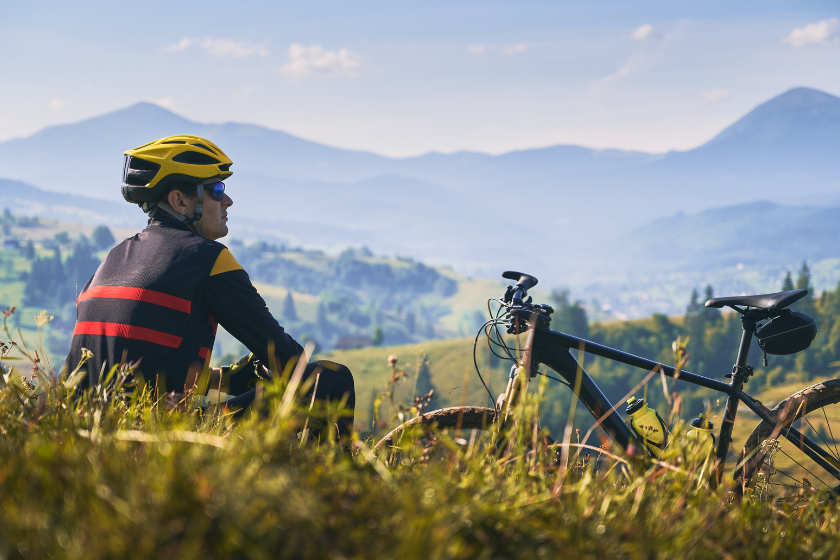
This is probably the number one mistake when starting bikepacking. We tend to pack a maximum of things "just in case," and that’s completely understandable. The result: duplicate clothing, useless material and objects, oversized camping equipment etc.
But every extra pound is quickly felt once on the road. An overloaded bike is more difficult to maneuver and above all more tiring, especially on climbs. In cycle touring, minimalism becomes a true comfort.
So, before leaving, think about what you definitely need. Ask yourself a simple question: "Will I really use this item every day?" If the answer is no, it can probably stay at home.
💡
Our advice:
> Favor light and versatile technical clothing.
> Limit the number of outfits.
> Choose compact equipment.
> Avoid duplicates.
> Test the total weight of your bike before departure.
> Favor light and versatile technical clothing.
> Limit the number of outfits.
> Choose compact equipment.
> Avoid duplicates.
> Test the total weight of your bike before departure.
2. Wanting to go too far, too fast
Another frequent mistake is overestimating your physical capabilities or endurance from the first trip. On paper, covering 80 or 100 kilometers a day may seem doable. In reality, when you add the weight of your luggage, the elevation gain, the weather, or accumulated fatigue, the effort becomes very different in comparison to a simple day trip by bike.
You might not necessarily think about it, but bikepacking also involves time off the saddle: finding a place to sleep, cooking, repairing a tire, taking breaks, or simply enjoying the scenery. To avoid turning your trip into a race against time, try not to plan itineraries that are too busy.
To start, we’d advise you to prioritize:
- A weekend or short trip.
- Reasonable stages.
- Routes with little elevation gain.
- Regions that are well-equipped with water points, shops and accommodation.
3. Not planning your days well enough
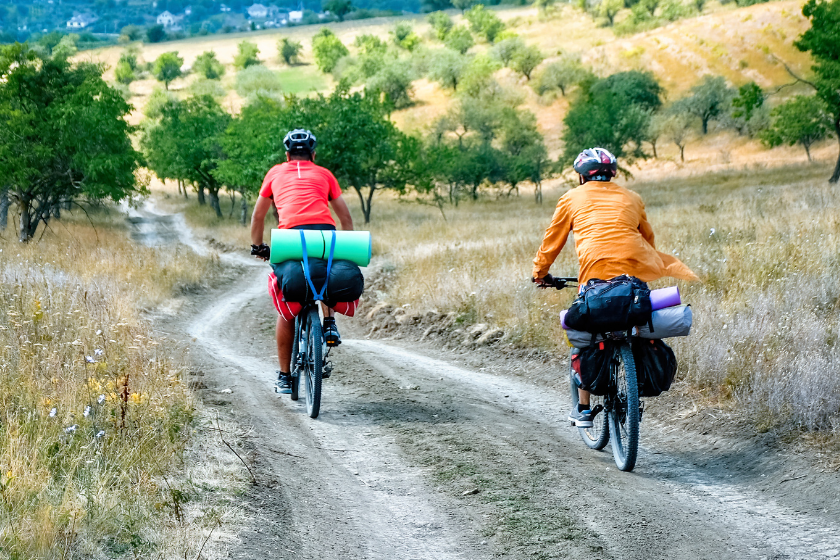
Bikepacking is wonderful because it leaves a lot of room for spontaneity. But trying to improvise too much and leaving without any preparation can quickly become complicated, especially if you’re a beginner.
Without necessarily planning every detail, we still recommend anticipating certain key points to avoid unnecessary and unpleasant surprises.
For example:
- Water points
- Isolated areas
- Resupply options
- Accommodation
- Difficult sections, etc.
💡
Tip: Downloading offline maps is always a good idea, especially in rural or mountainous areas.
4. Leaving with a poorly prepared bike
A bike trip will put your equipment to the test. Even a relatively simple route can become complicated in the event of an avoidable mechanical problem. Before departure, a complete overhaul is highly recommended, especially if your bike hasn’t been ridden for a long time.
Don’t hit the road without checking:
- The condition of the tires.
- The brakes.
- The drivetrain.
- The saddlebag attachments.
- The chain wear.
It’s also a good idea to learn some basic repairs, such as:
- Repairing a puncture.
- Putting a chain back on.
- Adjusting the brakes.
- Changing an inner tube.
You don't need to be a mechanical expert, but knowing how to handle these simple fixes will save you a lot of stress on the road.
5. Neglecting saddle comfort
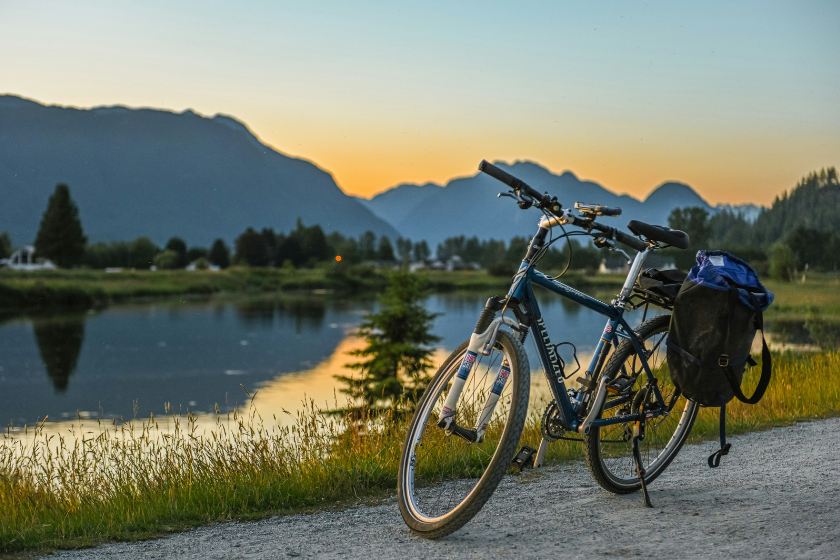
After several hours on the road, pain related to your position can become a real problem. An unsuitable saddle or poor adjustment can make every kilometer painful, especially over several days.
Before a bikepacking trip:
- Experiment with the adjustable elements of your bike (more on this below);
- Test your saddle;
- Invest in comfortable cycling shorts if necessary.
Don’t underestimate the impact of minor ailments either: numb hands, a tense neck or knee pain are often signs that an adjustment needs to be made to your bike.
🚵♂️
Good to know: Some stores offer postural assessments that allow for precise adjustment of your position on the bike (saddle height and setback, handlebar position, cleats, etc.) according to your physique and your pedaling style. This can be a real boost for starting off well, especially if you plan to cycle for several days.
6. Not testing your gear before the trip
Is your bike ready to hit the road? That's a good start, but don't forget to test all your gear before you leave! A new tent you can't set up, a stove that doesn't work, a sleeping bag that's less warm than expected, an unstable attachment...
All these details (which are not minor!) can quickly become very complicated during a bike trip.
So, before leaving:
- Fully assemble your equipment.
- Do a test ride.
- Ride with your bike fully loaded.
- If you are camping, use your gear to sleep outdoors for one night.
These tests make it possible to identify potential problems to ensure a smooth bike trip.
7. Poorly distributing the weight in the bags
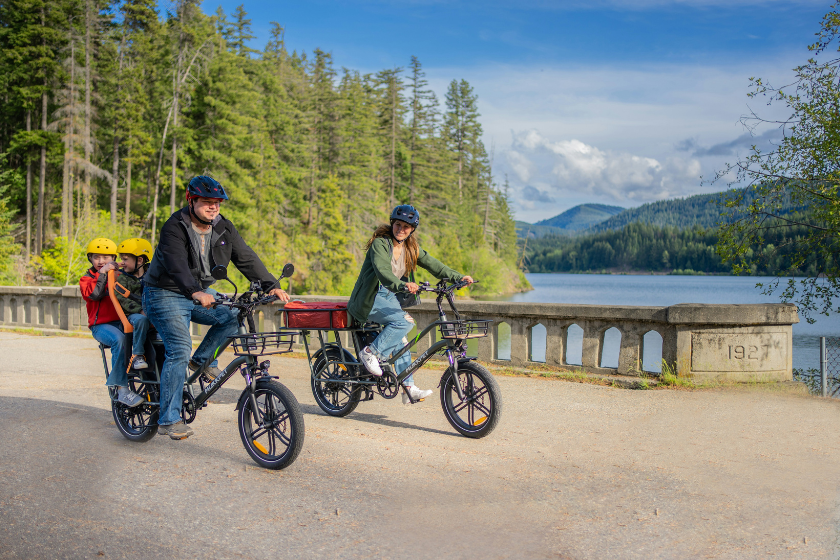
When bikepacking, bike balance is essential and weight distribution is a subtle art. When starting out, you might find yourself putting too much weight at the back, overloading the handlebars, or simply loading the bike randomly. But poor weight distribution can make riding unstable or unnecessarily tiring.
Here is our advice for properly distributing the weight on your bike:
- Heavy items should be placed in the center and as low as possible.
- Light gear can go in the saddle or handlebar bags.
- Items needed during the day should remain accessible.
A well-balanced bike completely changes comfort. You’ll certainly need a few trials and adjustments to find the ideal load, and that’s completely normal at the beginning!
8. Underestimating the weather
In cycle touring, the weather greatly influences the experience. Headwinds, continuous rain, intense heat or nocturnal cold can transform an otherwise ‘simple’ stage into a real challenge.
The classic mistake is only looking at the predicted temperature and leaving with poorly suited clothing. However, other elements are just as important, such as wind, sun exposure, or the risk of thunderstorms.
💡
Tips: A light waterproof jacket, breathable layers and rain protection are often essential, even in summer.
Remember that cycle touring involves an element of unpredictability. Don't hesitate to adapt your itinerary or take a break if the weather requires it.
9. Not preparing yourself before departure
So you’ve thought about preparing your bike, your gear and your itinerary... But have you also prepared yourself physically and mentally? Bikepacking requires some preparation, especially when spending several hours per day in the saddle for several consecutive days.
Leaving without training can lead to excessive fatigue from the early days, muscle aches or a loss of motivation.
You obviously don’t need to be an accomplished athlete to start cycle touring. But a few good practices and a little training can make a real difference before departure.
For example, you could consider:
- Using your bike for all your short daily trips.
- Gradually increasing the length of your rides.
- Riding with the bike loaded, to learn to manage the trajectory with weight.
💡
Tips: If you aren’t used to cycling long distances with a certain load, start slowly and gradually increase the difficulty!
Mental preparation also counts. Bikepacking sometimes involves the unexpected: changing weather, fatigue, route errors, or minor mechanical problems. Accepting that not everything is perfect will enable you to experience a more serene trip.
10. Neglecting food and hydration
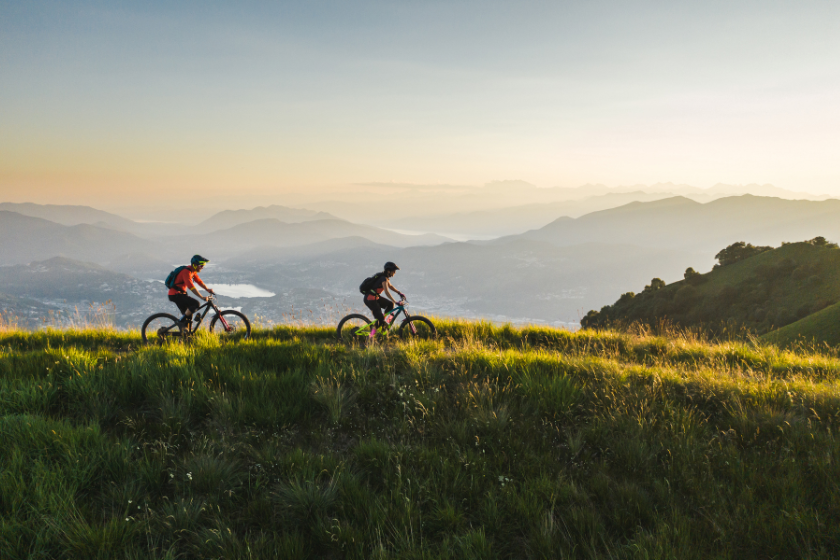
When cycling, energy needs increase quickly and fatigue can set in fast. This can lead to a drop in energy, difficulty pedaling, irritability, muscle aches and more.
In cycle touring, it’s better to drink and eat regularly, even if you’re not feeling hungry or thirsty. Simple snacks are often the most effective:
- dried fruits
- cereal bars
- sandwiches
- bananas
- nuts etc.
11. Comparing yourself to others
Social networks sometimes give a very idealized image of cycle touring: great crossings, ultralight gear, spectacular bivouacs, impressive performances...
But every trip is different. Some people ride 30 kilometers a day, others 150. Some sleep in a tent, others in accommodation. Some like long ascents, others prefer quiet routes.
There is no "right" way to bikepack. The most important thing is to build a trip adapted to your pace, your desires and your budget.
Make stops on the road with HomeExchange

When we imagine bikepacking, we often think of bivouacs or camping. But alternating nights under a tent with more comfortable stops can completely transform the experience, especially on long journeys.
Taking a break in a house or apartment allows you to:
- Recover better physically.
- Wash your clothes.
- Cook good meals.
- Recharge your devices.
- Sleep in good conditions.
- Travel lighter by limiting the need to carry certain camping equipment.
Hospitality stays are also an option that’s particularly suited to cycle touring. This is when you are accommodated in a private room at your hosts' place, while they are also at home. This is perfect if you simply want to make a one-night stop before hitting the road the next day.
In addition, this is also a great opportunity to share unique moments with your hosts, discuss nearby routes, and discover a destination differently thanks to their personalized advice.
🏡
Looking for a hospitality stay for your next bikepacking trip?
➡️ Go to this forum to discover homes located near cycle routes that have been shared by our members.
➡️ Go to this forum to discover homes located near cycle routes that have been shared by our members.
With HomeExchange, you can easily organize stops throughout your itinerary, whether through classic home exchanges, or one-night hospitality stays.
And this allows you to find a better balance between adventure, comfort and budget: it's ideal for a first trip, a family cycling holiday, or simply for traveling longer without exhausting yourself.
Last posts
- Portland, Seattle, Vancouver by Train: Amtrak’s New Airo Trains Cut Particulate Emissions 90%
- Member portrait: Vikki and Steve “Wonderful hosts who we feel are now friends”
- Agawa Canyon: The Perfect Fall Road Trip From Michigan Ends With a 114-Mile Train Ride
- 30 Minutes From Madison, New Glarus Is the Fall Getaway Crowds Still Haven’t Found
- Can I Pause or Skip a Year if I Don't Plan to Travel With HomeExchange?