Last posts
- Charlevoix, Quebec: A 78-Mile Panoramic Train Ride and the Perfect Slow Road Trip
- Bay of Fundy Road Trip from Maine: 3 Hidden Gems by the World’s Highest Tides
- Can I Exchange a Secondary Home or Vacation Home?
- Does HomeExchange Work Internationally?
- 93% of Canadian Travelers Say Overtourism Will Shape Their Trips: How Home Exchange Fits the Shift
Do you dream of hiking and exploring the mountains? The world’s most famous mountain ranges offer superb landscapes and a multitude of outdoor activities that attract more and more travelers every summer. But this enthusiasm for the mountains is not without consequences. Certain natural sites are now suffering the effects of over-visitation, in which wildlife is sometimes disturbed, and seemingly harmless actions can have a significant impact on ecosystems. So, if you plan to hike in the mountains this summer, take a look below at some of the best practices for fully enjoying these naturally beautiful places, while limiting your impact.
🏔️
Did you know? Mountain visits are hugely popular. According to the Atout France Mountain barometer published in the summer of 2025, 41% of French people went to the mountains in the summer at some point in the last three years. While in the US, the National Geographic reported that the Great Smoky Mountains (Appalachian Mountains) receive over 11.5 million visits every year, making it the most visited national park in the country.
1. Stay on marked trails
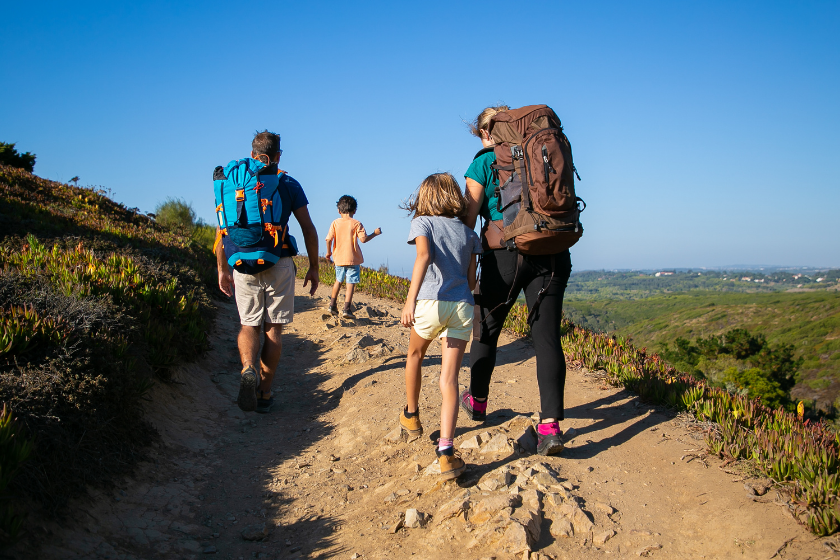
It can be tempting to leave marked trails to admire a beautiful panorama or take a photo. However, this practice, which seems harmless, contributes to the degradation of natural environments.
Repeated deviations off the designated paths accelerate soil erosion, weaken vegetation and create new tracks that encourage other visitors to do the same, gradually aggravating the situation. In some protected areas, a few dozen deviations are enough to significantly damage particularly fragile plant species.
🚵
The trails are designed to allow the discovery of landscapes while limiting human impact. By respecting them, you can enjoy the mountains without damaging them!
2. Leave nothing behind
The principle is simple: whatever goes up with you, must come down with you. We don't necessarily think about it, but even biodegradable waste can be a problem. A banana peel, an apple core or a crust of bread can sometimes take several months to decompose at altitude. This organic waste can also modify the eating habits of certain wild animals.
We advise you to always keep enough space in your bag to take your waste back with you, including the smallest items: tissues, packaging, cigarette butts or bottle caps. This also applies to organic waste and picnic leftovers.
🌄
To go further: Adopt the spirit of "leaving a place cleaner than you found it".
Beyond simply respecting the rules, why not adopt a proactive approach? Many mountain lovers also pick up waste seen on the trail (even if it doesn’t belong to them), raise awareness among their loved ones or people met on the trails, or support local preservation initiatives.
For example, are you planning on sleeping in a refuge or a gite? If you have room in your bag, the owners will appreciate it if you offer to take some rubbish (in addition to your own) down the mountain. This is because logistics are complex in the mountains!
Beyond simply respecting the rules, why not adopt a proactive approach? Many mountain lovers also pick up waste seen on the trail (even if it doesn’t belong to them), raise awareness among their loved ones or people met on the trails, or support local preservation initiatives.
For example, are you planning on sleeping in a refuge or a gite? If you have room in your bag, the owners will appreciate it if you offer to take some rubbish (in addition to your own) down the mountain. This is because logistics are complex in the mountains!
3. Prepare your hike before setting off
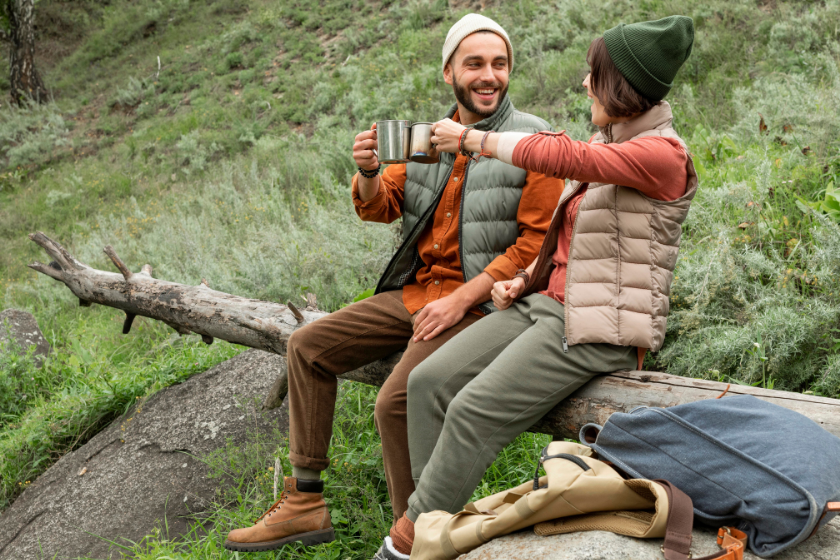
Preparing your hike may seem obvious, but this step is sometimes underestimated. Spectacular images published on social media often give the impression that the mountain is a huge playground accessible to everyone, at any time.
But the reality is more complex. Rescuers regularly have to intervene when people have set off into the mountains without evaluating the difficulty of the route or the risks related to the weather.
Here are some tips:
- Check the local regulations and the specific features of the place you want to explore.
- Check the weather to equip yourself accordingly.
- Study the route and honestly evaluate your physical level. It’s better to choose a hike adapted to your abilities than to find yourself in difficulty halfway through the route. (And above all else: beware of AI-generated routes, which have already put many new adventurers at risk!)
This preparation not only guarantees your safety, but also avoids rescue interventions that drain significant resources.
4. Respect the tranquility of each place
The mountains are often sought after for their calm environments. However, certain behaviors can quickly harm this peaceful atmosphere: playing music on a portable speaker, noisy discussions, or drones used without precaution disturb not only the tranquility of other hikers, but also, and in particular, wild animals.
For many species, summer is an important period for reproduction, raising young, or building up reserves necessary for winter. If these animals are repeatedly disturbed, this can disrupt certain cycles or force them to expend precious energy.
5. Do not swim in altitude lakes
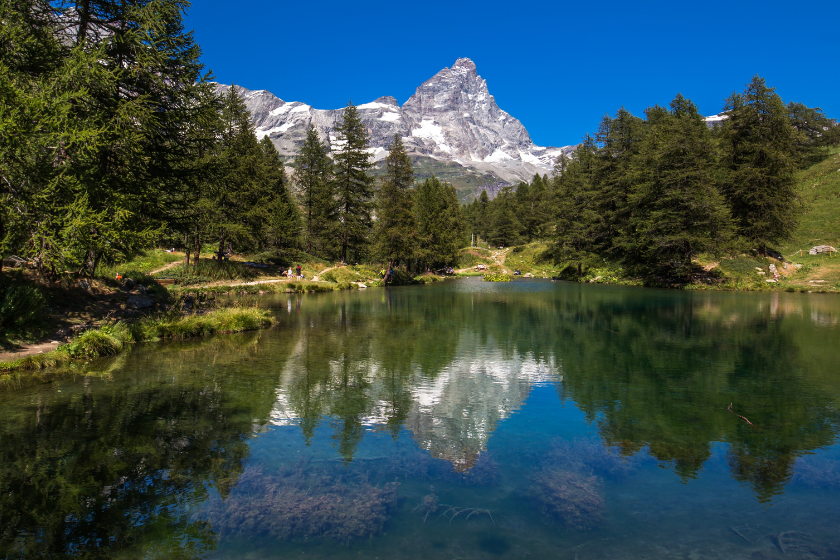
After a hike, it’s often tempting to cool off in high-altitude lakes with turquoise waters. But mountain lovers know all too well that even if it’s not always formally prohibited, it’s not recommended to swim in these lakes.
The over-visitation of certain altitude lakes explodes during periods of high heat, which can quickly pose problems. These environments often shelter sensitive species and fragile ecosystems, and the quality of the water and local biodiversity can be negatively impacted by our sunscreens and other cosmetic products, or simply by trampling on the banks.
In certain protected natural areas, specific regulations govern or prohibit swimming. It is therefore important to find out the specifics before getting into the water.
🌿
For example, since the beginning of June 2026, swimming has been formally prohibited in all Pyrenees (Béarn and Bigorre) lakes from 1000 meters altitude.* In the US, rules vary according to each expanse of water, so always do your research.
6. Observe animals without feeding them
Encounters with animals are part of the magical moments of a stay in the mountains. But these moments must remain distant observations: feeding wild animals is strongly discouraged.
Marmots, for example, are undoubtedly the most photographed animals in the Alps. However, because they’re used to being fed by hikers, they’re increasingly approaching trails and picnic areas. This behaviour may seem endearing, but you should know that it exposes them to diseases and dangers, it modifies their natural diet, and it makes them more dependent on human presence.
Even when animals seem to beg for food, keep your distance and let them live naturally.
📷
Tip: Consider bringing binoculars or a camera with a powerful zoom to observe wildlife without disturbing it.
7. Respect agricultural activities
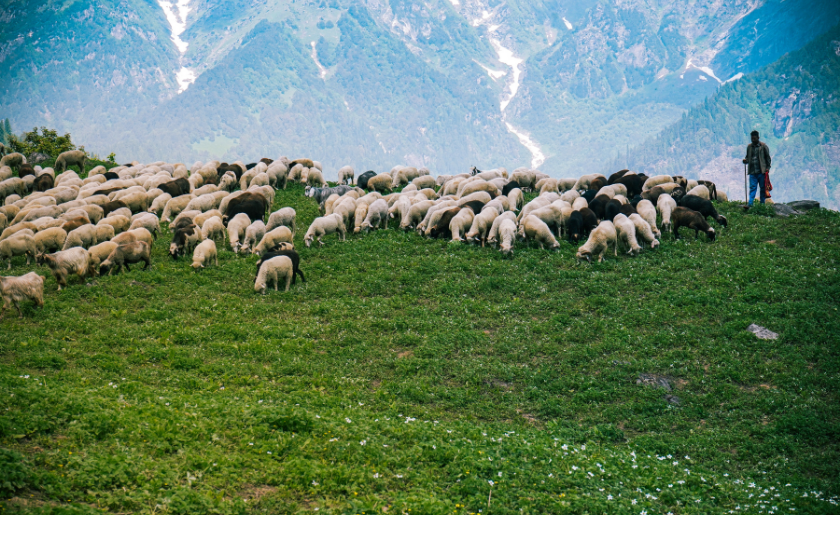
Summer is a particularly active period for mountain farmers. The mountain pastures host numerous herds and flocks, and hiking trails sometimes cross grazing areas.
Here are some basic rules to follow:
- Close the gates after you pass through them.
- Do not disturb domestic animals.
- Respect private property.
- If you are accompanied by a dog, check local rules. In some areas, its presence may be prohibited or strongly discouraged to protect wildlife or avoid conflict with herds.
⛰️
Good to know: In France, large dogs (often called Patou or Pyrenean Mountain Dogs), play an essential role in protecting farmer’s animals from predators. If you meet one, you should remain calm, slow down your pace, and widely bypass the herd or flock if possible.
8. Choose your destination by taking into account frequentation
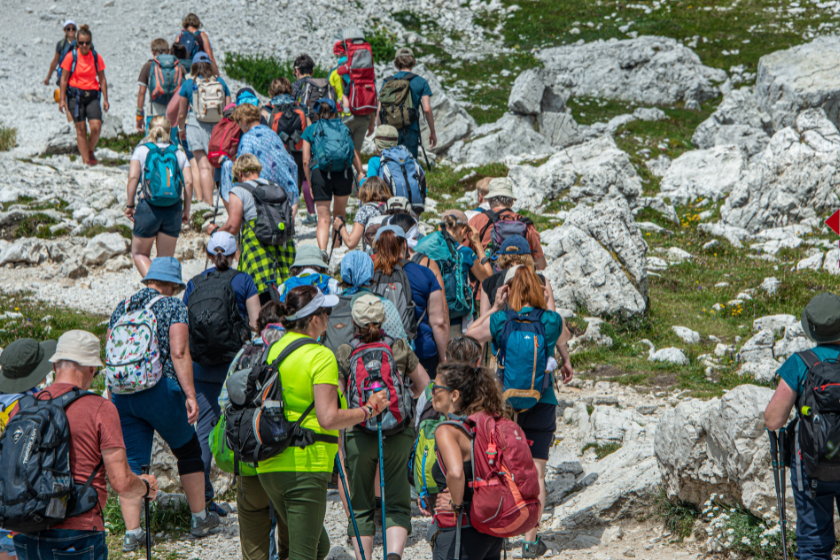
When we talk about hiking in the mountains, we immediately think of certain iconic routes, such as the GR20 in Corsica, the Tour du Mont-Blanc (spanning France, Italy and Switzerland) or the Milford Track in New Zealand. But over the years, these hikes have also become victims of their own success, welcoming hundreds, even thousands of hikers every day during the peak seasons.
This high frequentation is not without impact: trail erosion, high waste production, disturbed ecosystems, refuges under pressure... In some sites, regulation measures have therefore had to be implemented.
Before choosing your destination, take the time to ask yourself what really motivates your desire to go there:
- Is it because this place is unmissable?
- Because you saw it on social media?
- Or simply because you dream of wide-open spaces and nature?
The good news is that mountain hiking is not limited to a few famous routes. Triglav National Park in Slovenia, The Cheviott Hills on the Scottish border, Oregon’s Wallowa Mountains or The Vosges, the Jura, the Massif Central, or the Pre-Alps in France - amongst others - also offer superb and much quieter hikes.
By choosing a less frequented destination, you will enjoy more of what makes the mountain charming: silence, the feeling of space, and the pleasure of having a trail almost to yourself. And you participate in the preservation of the spaces by spreading the impact of tourism more widely across the territory.
9. Think before sharing the location of a place
Social media has profoundly transformed the way we travel. A superb photo published by an influencer on Instagram can attract thousands of visitors in a few weeks to a location that was previously rarely visited. Certain massifs, lakes, waterfalls and viewpoints have seen their volume of visitors explode in a few years.
The lakes of Lauvitel or La Muzelle, in the Écrins massif, for example, have experienced this in recent years. Their sudden popularity on social media led to a significant increase in visitors, bringing an increase in wild bivouacs, rubbish, forbidden fires and disturbances for the local fauna.
The idea is not necessarily to stop sharing your memories, but we encourage you to be discerning. It is wiser to avoid precise geolocations when visiting fragile locations or places that are poorly developed for tourism.
🚞
Tip: If you want to inspire other people to travel differently while still preserving the wild nature of certain places, consider simply indicating the massif or the region rather than the exact location.
💡
Did you know?
Most of these good practices are inspired by the "Leave No Trace" philosophy. The idea is simple: enjoy nature while limiting your impact as much as possible. Stay on the trails, take your waste back, respect wildlife, and avoid degrading places to allow natural spaces to be preserved for the next visitors... and for future generations.
Most of these good practices are inspired by the "Leave No Trace" philosophy. The idea is simple: enjoy nature while limiting your impact as much as possible. Stay on the trails, take your waste back, respect wildlife, and avoid degrading places to allow natural spaces to be preserved for the next visitors... and for future generations.
Enjoying the mountain today... and tomorrow
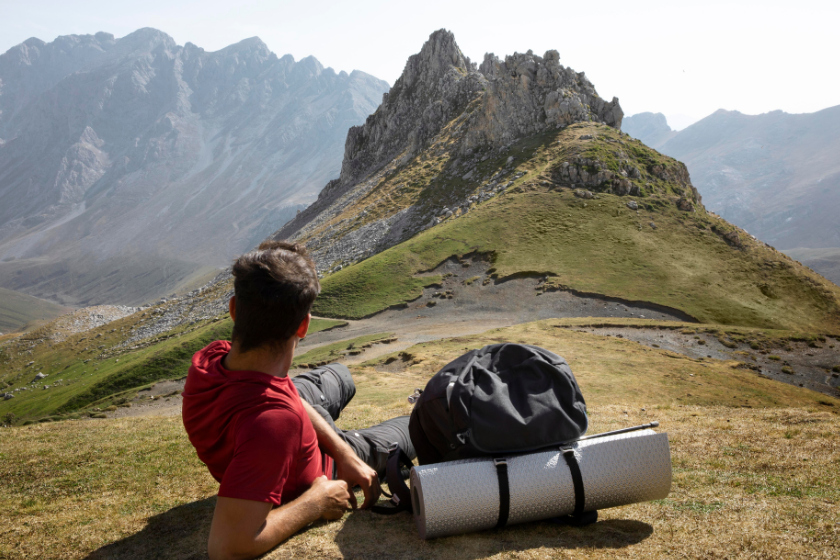
Spending a few days in the mountains in summer allows you to reconnect with nature, slow down your pace of life, and discover exceptional landscapes. But this experience also implies a certain responsibility.
The good news is that preserving the mountain does not mean giving up enjoying it. On the contrary! Observing a marmot without disturbing it, discovering a little-frequented trail without geotagging it, leaving with the waste found on your path, or taking the time to chat with the locals simply allows you to live a more respectful, and often much more enriching, experience.
Each of these gestures and each of these good practices contribute to preserving these unique natural spaces so that the mountains remain wild, welcoming and well-preserved for future generations.
*Source : Fédération Française de Randonnée
💡
Other articles that might interest you:
> HomeExchange’s responsible travel pledge
> What else can you lend or exchange besides your home?
> Home exchanging and electric cars: best practices
> Cycle tourism: 12 tips to get started
> HomeExchange’s responsible travel pledge
> What else can you lend or exchange besides your home?
> Home exchanging and electric cars: best practices
> Cycle tourism: 12 tips to get started
Last posts
- Charlevoix, Quebec: A 78-Mile Panoramic Train Ride and the Perfect Slow Road Trip
- Bay of Fundy Road Trip from Maine: 3 Hidden Gems by the World’s Highest Tides
- Can I Exchange a Secondary Home or Vacation Home?
- Does HomeExchange Work Internationally?
- 93% of Canadian Travelers Say Overtourism Will Shape Their Trips: How Home Exchange Fits the Shift